Fixing Flickering Lights, Fast
Flickering lights are easy to ignore until they're not, and the cause is rarely as simple as a dying globe.
Here's what actually makes lights flicker, when it matters, and how we track it down.
Talk to our team on (02) 9538 7356, whatever the time, and we'll help you work out the cause.
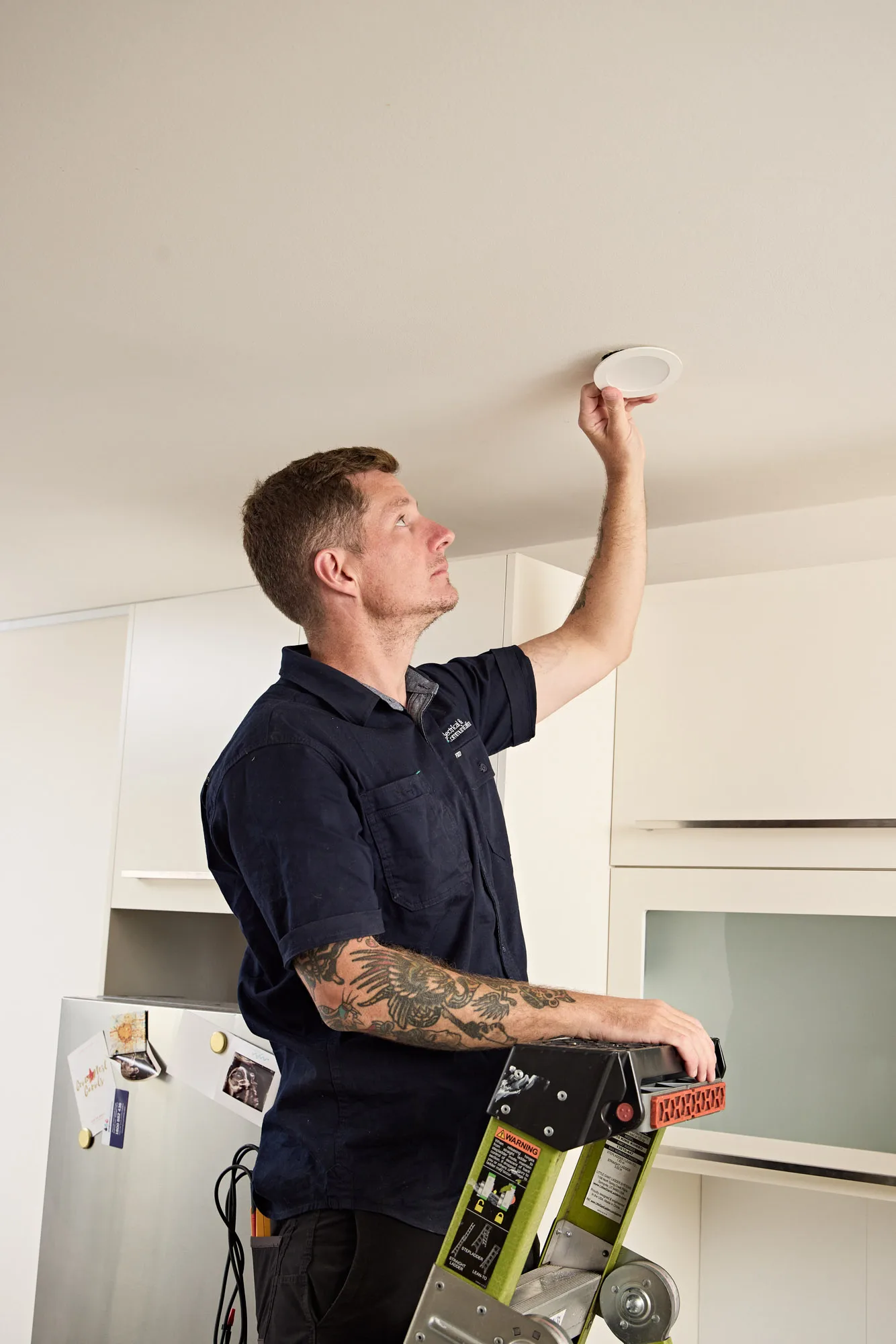
Flickering Lights, Explained in Plain English
A steady light needs a steady connection and a steady voltage. Flickering means one of those isn't holding.
A loose connection at the switch, fitting or junction box interrupts the circuit briefly, enough to flicker without tripping anything.
A voltage dip happens when a heavy appliance switches on and briefly pulls the circuit's available voltage down.
An incompatible dimmer or LED driver can flicker constantly if the dimmer wasn't designed for the LED load now connected to it.

Is Flickering Dangerous?
Occasional, single-fitting flickering is usually a nuisance. A few patterns are worth acting on faster.
Call sooner rather than later if flickering affects multiple rooms at once, if you notice warmth or a smell near a switch or fitting, or if it's accompanied by buzzing at the switchboard.
Flickering limited to one light, especially an older globe or a mismatched dimmer, is rarely urgent and can usually wait for a normal booking.
Widespread or worsening flickering points toward a loose connection somewhere upstream, and that's worth a proper look before it becomes something bigger.
A quick phone description is usually enough for us to gauge how urgent yours is.
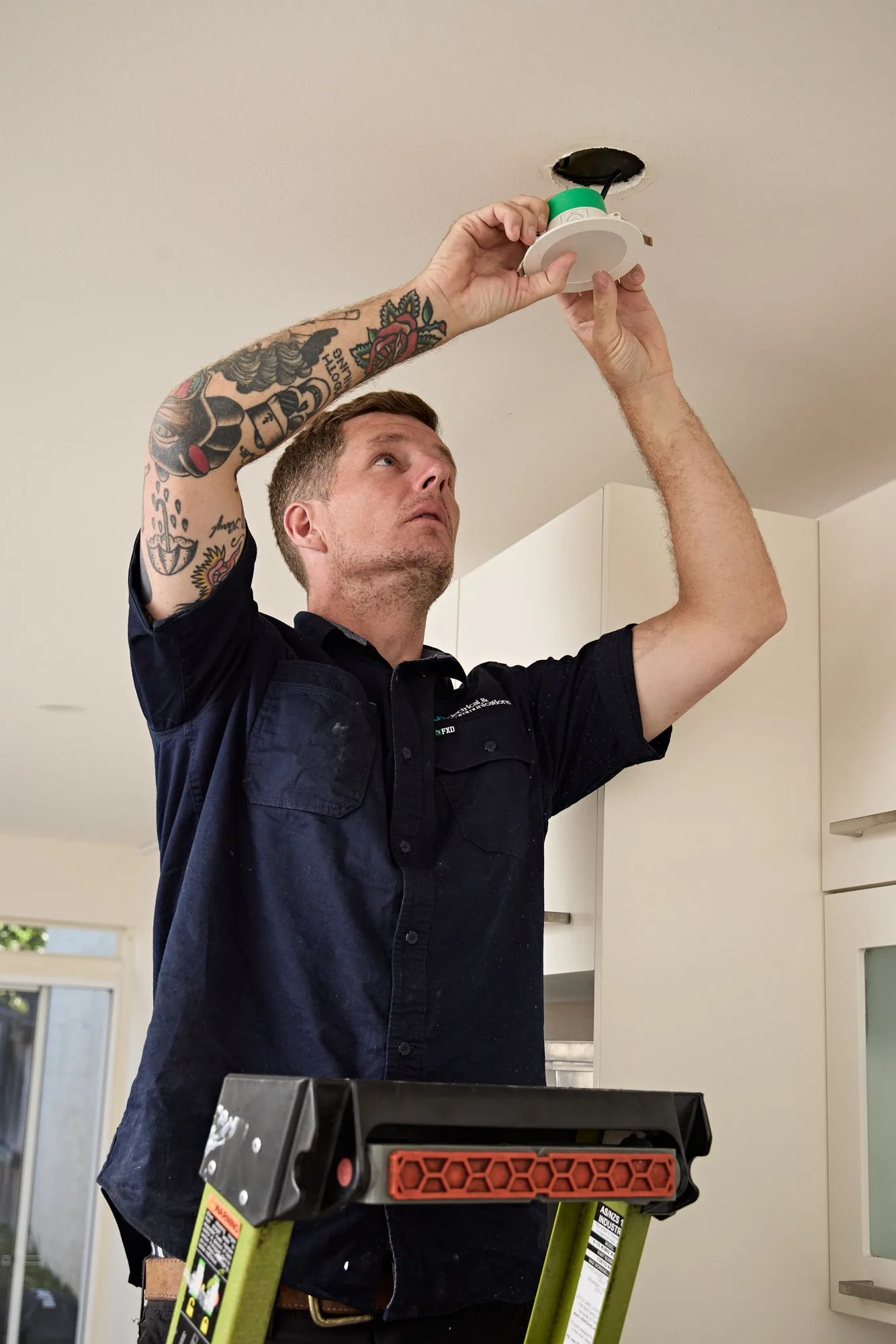
Common Causes of a Flickering Light
Roughly from most to least common:
- A loose bulb or fitting connection: simple to check, simple to fix
- An incompatible dimmer switch: older dimmers weren't built for modern LED loads
- A failing LED driver: the small transformer inside some LED fittings wearing out
- A loose neutral connection: a wiring fault that can affect several lights at once, more serious than it looks
- Voltage fluctuation from a heavy appliance: air conditioning or an oven pulling the circuit down briefly
- An overloaded lighting circuit: too many fittings on one circuit for its rated capacity
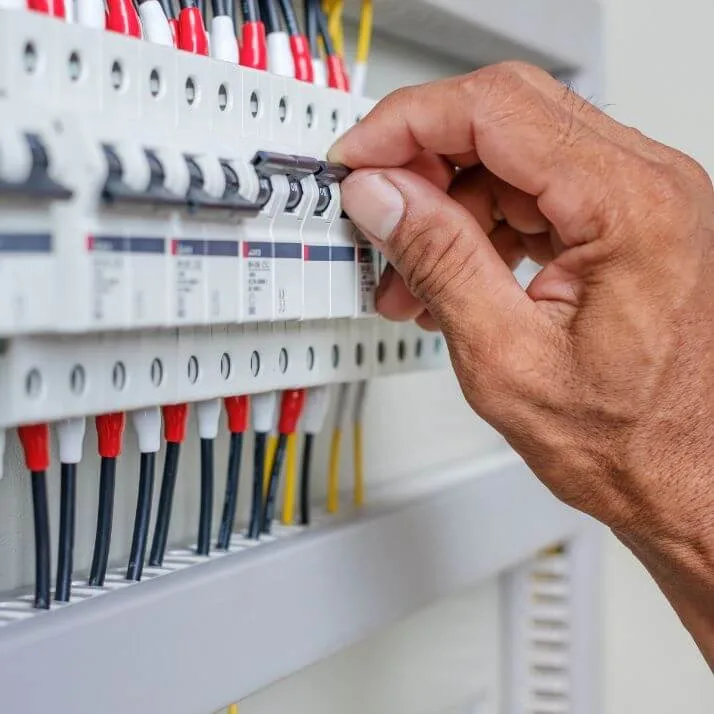
What To Do Right Now
- Note the pattern. One light or several? Constant or only with certain appliances running?
- Check the bulb. Reseat it, or try a known-good one, to rule out the simplest cause.
- Avoid touching switches or fittings that feel warm or show any discolouration.
- Call (02) 9538 7356 if it's spread across more than one fitting or room.
How We Fix and Certify the Repair
We start by narrowing down whether the fault sits at the fitting, the switch, the dimmer, or further back in the circuit.
Loose connections get re-terminated properly. An incompatible dimmer gets swapped for one rated to the LED load actually installed.
A loose neutral or a genuinely overloaded circuit needs the wiring itself put right, not a patch on the symptom.
Notifiable repairs get tested and paperwork lodged with Fair Trading before we call the job finished.
The Pennant Hills Pattern We Keep Seeing
Federation and Californian bungalow homes here were originally wired with one light circuit doing modest, simple duty, nothing like today's downlight-heavy renovations.
Retrofitting LED downlights onto a decades-old dimmer or circuit is where a lot of flickering starts, since the original hardware was never rated for that load or that dimming curve.
It's an easy trap: the new lighting looks great on install day, and the flickering only shows up weeks later once the driver's been under real load.
A proper compatibility check between dimmer, driver and fitting at install time avoids the whole problem, which is exactly what we do on every lighting job.
Older Federation homes on their original single light circuit sometimes show flickering the moment a second dimmer or a run of downlights gets added, simply because the circuit was never asked to carry that much before.
Preventing the Next Flicker
A few things stop flickering becoming a recurring headache:
- Matching dimmers to the actual LED load, not just swapping like for like
- Having loose connections re-terminated at the first sign of trouble, not left to worsen
- Running a big lighting renovation on its own dedicated circuit rather than an existing one
- A periodic switchboard check on older homes carrying a lot of retrofitted lighting
Light installation sorts dimmer and fitting compatibility properly the first time, while a hidden connection fault further back is a job for electrical repairs.
A Local Angle on Flickering, and Where Else We Help
Flickering that comes bundled with a breaker refusing to hold is often the same overload wearing two faces, so our page on a breaker that won't stay on is worth a look too. Any warmth, humming or crackling from the board itself is its own separate fault, explained under switchboard noise.
Pennant Hills, Thornleigh, Beecroft and the rest of our Hornsby Shire run all get the same fault-finding standard.

Get in Touch Today Before It Gets Worse
A dimmer swapped without checking the load behind it rarely stays fixed for long.
Call (02) 9538 7356 and take $50 off your first service, or fill in our online enquiry form so we can get back to you.
Common questions
Common Flickering Lights FAQs
Does old wiring make flickering worse?
Yes. Aged wiring and older connections are more prone to the loose joints and resistance that cause flickering, especially once new LED fittings are added to a circuit that predates them.
Will my safety switch protect me from this?
A safety switch protects against shock from an earth fault, not flickering itself. Flickering is usually a connection or load issue that a safety switch won't necessarily catch.
Will the repair come with a certificate?
Where the fix is notifiable work, yes. We test the repair and lodge the Certificate of Compliance with NSW Fair Trading before calling the job done.
Why does it only happen at night or when other appliances run?
Evening is peak load, so a circuit running near capacity is far more likely to sag when a heater, oven or air conditioner kicks in.
How much does it cost to fix flickering lights?
It depends on the cause: a loose connection is a straightforward repair, while a dimmer-compatibility or circuit-capacity issue costs more. We quote it in writing once we've diagnosed it.
Is it my appliance or my wiring?
If flickering follows one appliance switching on, that's the lead. If it happens randomly across the house, the wiring or switchboard is the more likely cause.