Blown Fuse: What It Means and What to Do
A blown fuse plunges one circuit into darkness while the rest of the house carries on, and the fix is never a simple wire swap.
Here's what it actually means and what's worth doing before we arrive.
Ring (02) 9538 7356 for a straight answer, often same or next day.
Blown Fuse, Explained in Plain English
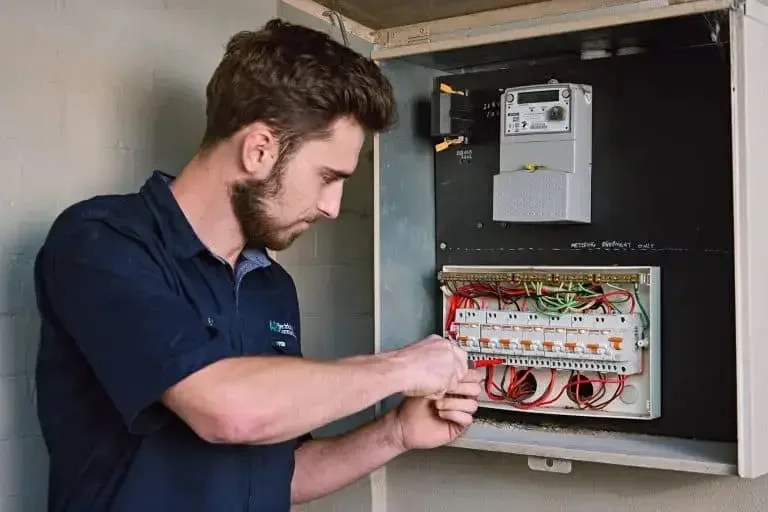
A fuse protects a circuit by design, not by accident.
Inside a rewireable fuse carrier sits a short length of soft fuse wire, rated to melt and break the circuit before the cable itself overheats.
When it blows, the fuse did its job. The circuit asked for more current than the wire was rated to carry, and the wire gave way on purpose.
That's different to a breaker tripping, which just needs a flick back on. A blown fuse needs the wire itself replaced, and it needs replacing with the right gauge.
Is a Blown Fuse Dangerous?
Usually not urgent on its own. Often serious if it keeps happening.
A single blown fuse from one overloaded circuit is a nuisance, not an emergency. Reset it once, and if it holds, book a look when it suits.
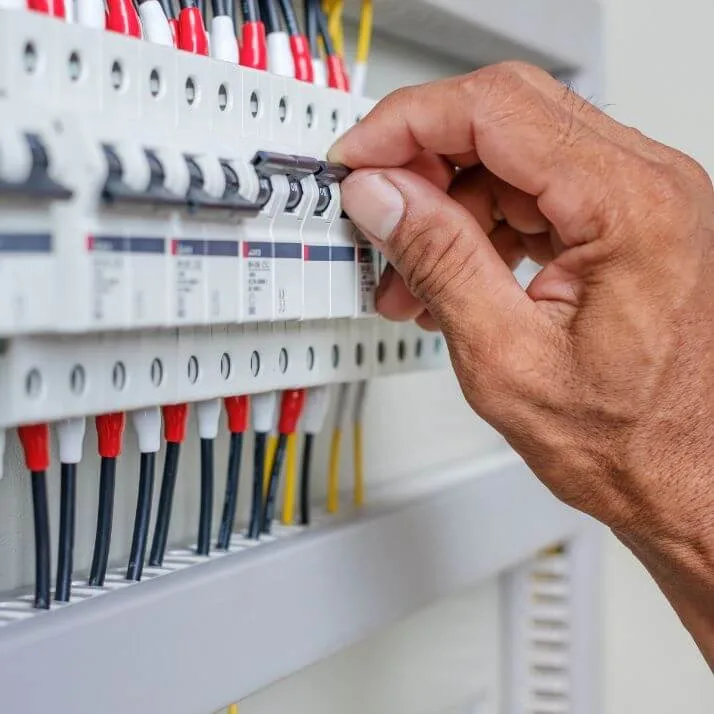
Worth treating as urgent: a fuse that blows again within minutes of a fresh wire, any scorch marks or discolouration around the fuse carrier, a burning smell near the board, or a carrier that's warm to touch.
Those signs point past a simple overload toward a fault in the wiring itself, and that's a job for tonight, not next week.
If in doubt, leave the circuit off and call. We'd rather talk you through it for free than have you guess.
The Most Likely Causes
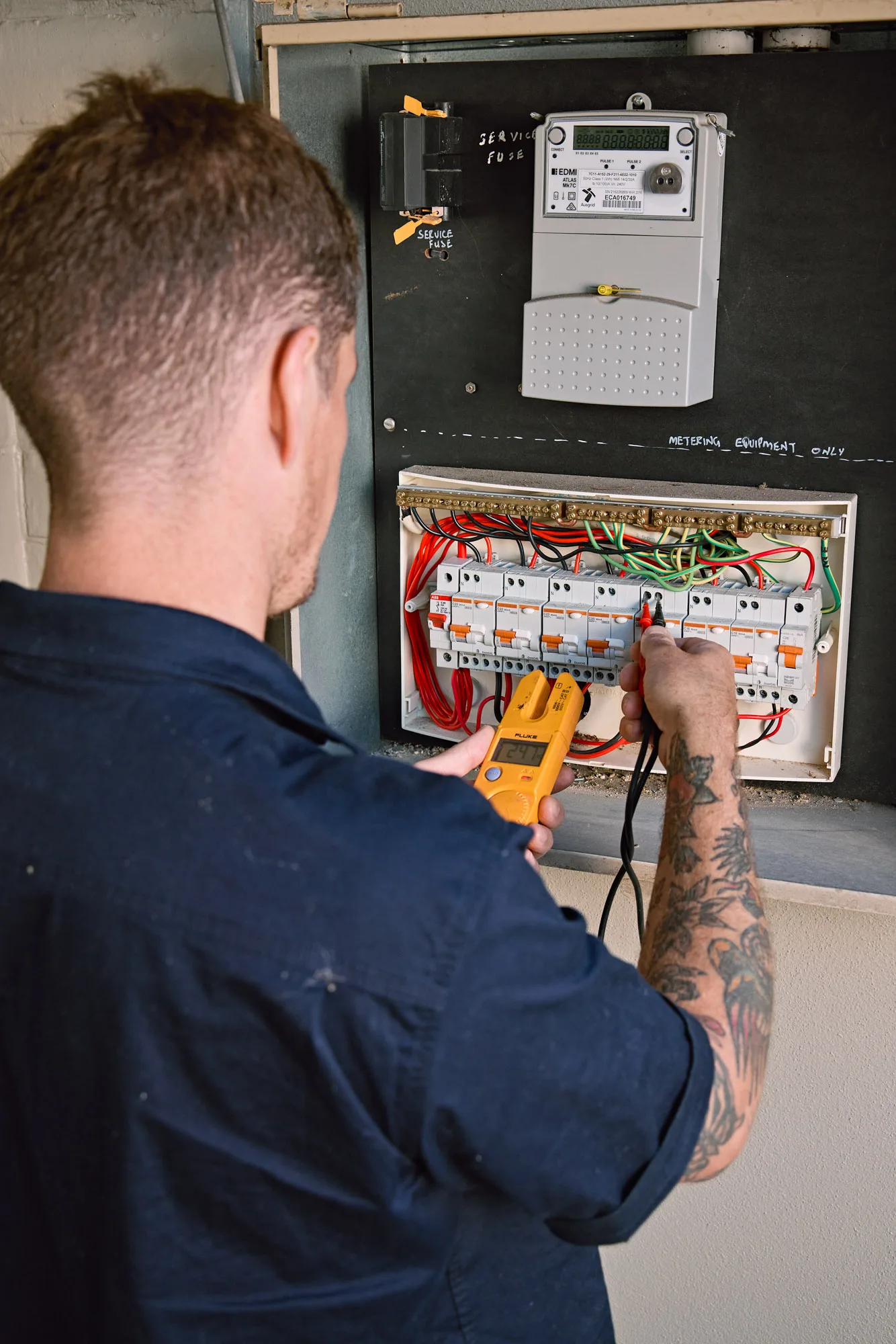
In our experience the cause is almost always one of the following, roughly in order of how often it turns up:
- Circuit overload: too many appliances drawing power on the one circuit at once
- A faulty appliance: something with an internal fault dragging more current than it should
- A short circuit: bare wires touching, often from age or damage behind a wall or fitting
- Old, thinned fuse wire: wire that's aged and now blows at a lower load than it was rated for
- A loose connection: a joint that's worked loose and started arcing under load
- Moisture: dampness reaching a point or fitting, common after storms or in an outdoor circuit
What To Do Right Now
- Switch off whatever appliance was drawing power when the fuse went, if you can pin it down.
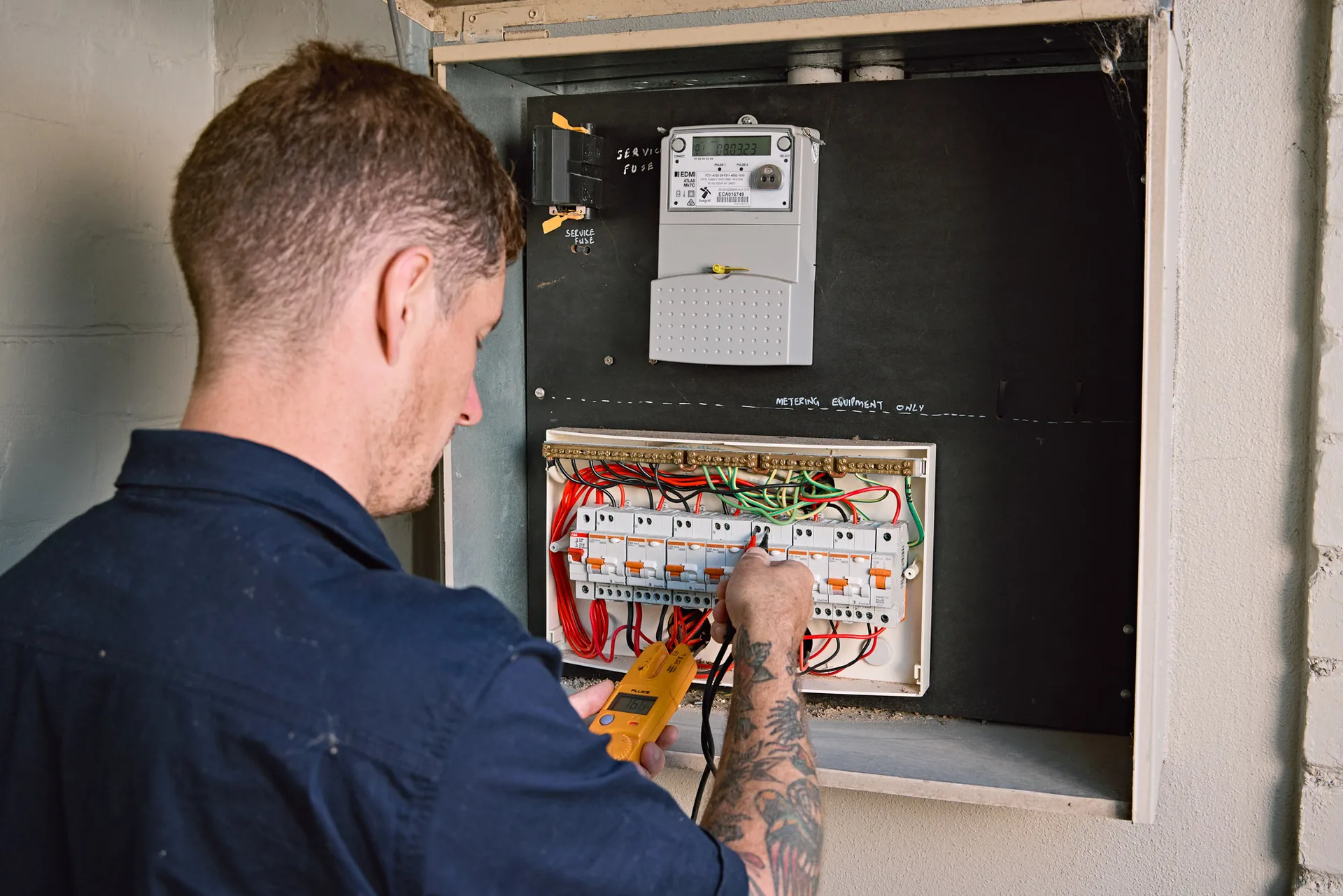
- Keep clear of the carrier. Don't reach into a live fuse holder or attempt a rewire.
- Note what tripped it. Was a heater, kettle or appliance running at the time? That detail helps us find the fault faster.
- Call us on (02) 9538 7356 rather than reset it repeatedly and hope.
How We Fix a Blown Fuse
We start by isolating the affected circuit safely, then work out why the wire blew rather than just replacing it and moving on.
That means testing the circuit's actual load, checking connected appliances, and inspecting the fuse carrier itself for heat damage or a wrong-gauge repair from years past.
Most fuse boards this old are also carrying more load than they were ever designed for, so we'll flag honestly if the real fix is a modern circuit breaker rather than another fuse wire.
Where the work is notifiable, testing is signed off with a Certificate of Compliance once we're done.
The Pennant Hills Pattern We Keep Seeing
Long-held homes off Yarrara Road and Trebor Road still commonly run original rewireable fuse carriers, decades after most of the network moved to breakers.
Owners rarely think about the fuse board until one blows, since a working one asks for nothing.
The pattern we keep finding is a carrier that's had its wire replaced more than once over the years, sometimes with a gauge that doesn't quite match the circuit it protects.
That's an easy thing to get wrong without test gear, so a repeat blow deserves proper diagnosis instead of another spare fuse wire from the hardware store.
How to Stop It Happening Again
A blown fuse rarely needs more than one of these to stop recurring:
- Converting the fuse to a modern circuit breaker, so a fault flicks off and resets by hand rather than burning out a wire you then have to renew
- Adding a safety switch (RCD) to the circuit, catching earth faults a fuse alone won't
- Spreading heavy appliances across more than one circuit instead of stacking them
- A full switchboard upgrade where several fuses are all showing their age at once
Our switchboard upgrades service covers the board-level fix, and electrical repairs handles a one-off fault on an otherwise sound circuit.
Related Faults and Surrounding Areas
Fuse wire and a breaker are two ways of protecting the same circuit, so the causes behind a tripped circuit breaker overlap heavily with what blows a fuse. Hearing a buzz or feeling warmth at the board points somewhere else again, and our noisy breaker box page covers that.
We work this fault right across Pennant Hills and into Thornleigh, Beecroft and the wider Hornsby Shire footprint, often same or next day.

Call Now About Your Blown Fuse
A fuse that keeps blowing is telling you something, and guessing at the fix rarely ends the story.
Call (02) 9538 7356 for a free quote, with $50 off your first service, or send the details through the contact page if talking right now doesn't suit.
Common questions
Blown Fuse FAQs
Do old fuses make this worse?
Rewireable fuses age in ways breakers don't. The fuse wire itself can thin out and blow at lower loads than it used to, making nuisance blows more frequent over time.
Can a blown fuse cause a fire?
The fuse itself is doing its job by blowing. The risk sits in whatever forced it to blow, and in fuse wire that's been patched with the wrong gauge, which is why we check both.
Can I fix it myself?
No. Replacing fuse wire or resetting a fuse carrier on a live board is licensed electrical work under NSW law, not a DIY task, whatever the old carrier's instructions say.
Why does it only happen at night or when appliances run?
Evening is peak load. Heaters, ovens and lighting stacking on the same circuit at once is often what tips a marginal fuse over the edge.
Can I keep using the circuit while I wait?
Leave that circuit off until we've had a look. Forcing a fresh fuse wire back in without knowing why the last one blew just invites a repeat, or worse.
How do you find the fault?
We isolate the circuit, test each connected point and appliance, and check the fuse wire's condition against what the circuit is actually carrying.